




China's clothing exports reached $120.7 billion in the first three quarters of 2026, while traditional Chinese-style apparel drew interest from overseas buyers at the 140th Canton Fair. For exporters, manufacturers and buyers, the figures and reported use of smart production lines warrant attention as signals for procurement and delivery planning. The supplied information does not identify a new trade rule or regulatory change.
Export Growth and Orders at the Canton Fair
According to figures attributed to the General Administration of Customs, clothing exports rose 4.8% year on year to $120.7 billion in the first three quarters of 2026. September exports increased 23.9% year on year, marking a fourth consecutive month of relatively rapid growth.
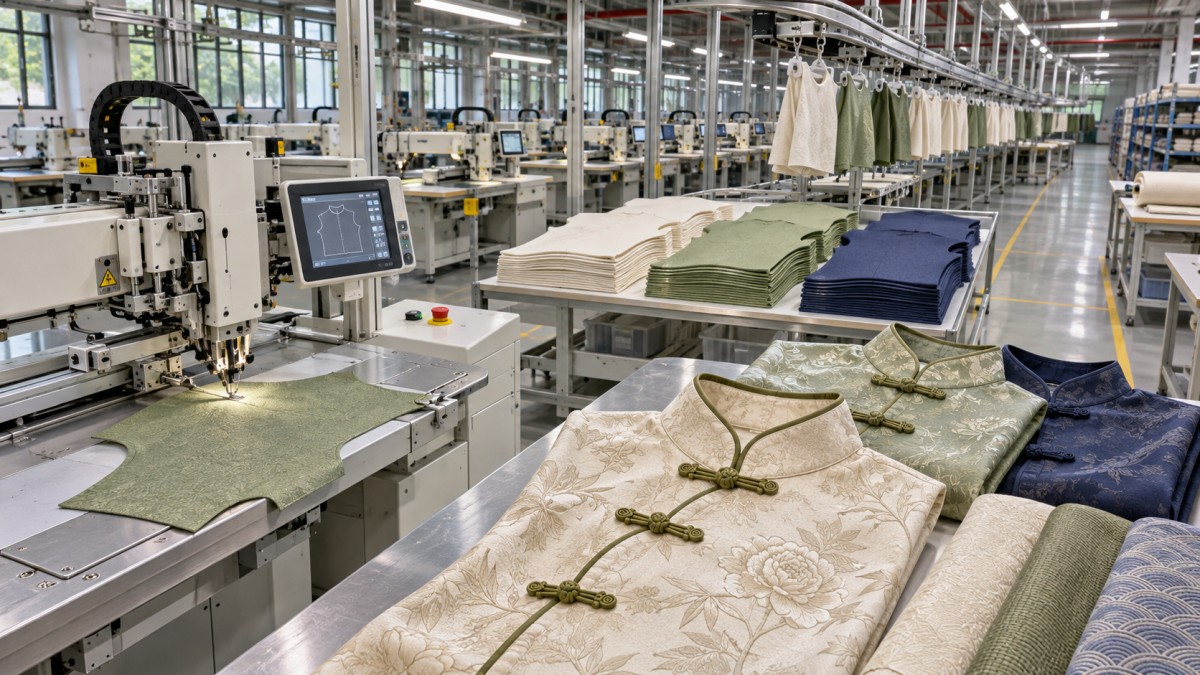
During the 140th Canton Fair, traditional Chinese-style and fashion apparel attracted overseas buyers. Related companies were using smart production lines to respond quickly to overseas orders.
What Faster Order Fulfillment Could Mean for Trade
Exporters and Overseas Buyers
From an industry perspective, buyer interest in traditional-style apparel may lead exporters and purchasers to pay closer attention to order specifications, quantities and agreed delivery dates. Both sides can verify applicable trade requirements and documentation for each transaction; the supplied information does not establish that any of those requirements have changed.
Manufacturers and Suppliers
Analysis suggests that smart production lines could help manufacturers adjust production to overseas orders, but their effect on delivery will depend on execution across the supply chain. Manufacturers and suppliers may need to review material availability, production scheduling and quality checks when assessing order commitments.
Checks Before Committing to Delivery
Align Specifications and Capacity
Companies can confirm product details and production capacity with buyers before agreeing on delivery schedules. This may be particularly relevant where orders for traditional-style apparel involve different designs or quantities, although the supplied information does not specify individual order terms.
Review Transaction Documents and Requirements
Exporters and buyers can check the documentation and product requirements applicable to their transactions and clarify who will provide supporting materials. These are suggested checks, not new obligations established by the reported export figures or fair activity.
Monitor Production and Supply
Manufacturers may find it useful to assess whether material supply and production schedules can support promised delivery dates. Continued attention to order fulfillment and quality could help companies evaluate how well their production arrangements respond to changing demand.
A Market Signal, Not Evidence of a New Rule
At this stage, the reported export growth and fair activity are more appropriately understood as market and production signals than as evidence of a policy or regulatory change. Analysis suggests that smart manufacturing may support a more flexible supply chain, but the supplied information does not establish how broadly those capabilities are used or how they will affect future trade.
Subsequent official trade information, any relevant regulatory announcements and feedback on order fulfillment could help businesses assess whether the reported momentum continues and whether transaction requirements change.
Reading the Export Figures in Context
The reported increase in clothing exports and overseas interest in traditional-style apparel point to activity worth tracking across procurement and manufacturing. Companies can treat the figures as a basis for reviewing capacity and delivery plans, while avoiding assumptions that growth will persist or that a new trade requirement has taken effect.
Basis for This Report and Further Verification
This article is based on the user-provided news title, event timing and summary. No specific official source link was provided in the input, and the figures and related details require continued verification. Relevant material to monitor may include customs or trade authority information, official announcements and industry reports, alongside subsequent trade execution and business feedback.
- Textile IoT Capital & EconomicsTariffs and Inflation Weigh on Demand as U.S. Apparel Imports Fall to $56.68 BillionU.S. apparel imports fell 6.14% to $56.68 billion as tariffs and inflation weighed on demand. Explore what this could mean for buyers and exporters.
- Fast Fashion & Agile MfgChoosing Modular Textile Manufacturing Systems for Short Production RunsExplore textile manufacturing systems modular enough for short runs. Compare changeovers, costs and integration to find the right production setup.
- Textile IoT Capital & EconomicsU.S. Textile and Apparel Exports Fall 5.7% in First Nine Months of 2026U.S. textile and apparel exports fell 5.72% to $15.775 billion in the first nine months of 2026. Explore the Mexico decline and what the data means for trade.
Related News
Get weekly intelligence in your inbox.
No noise. No sponsored content. Pure intelligence.
